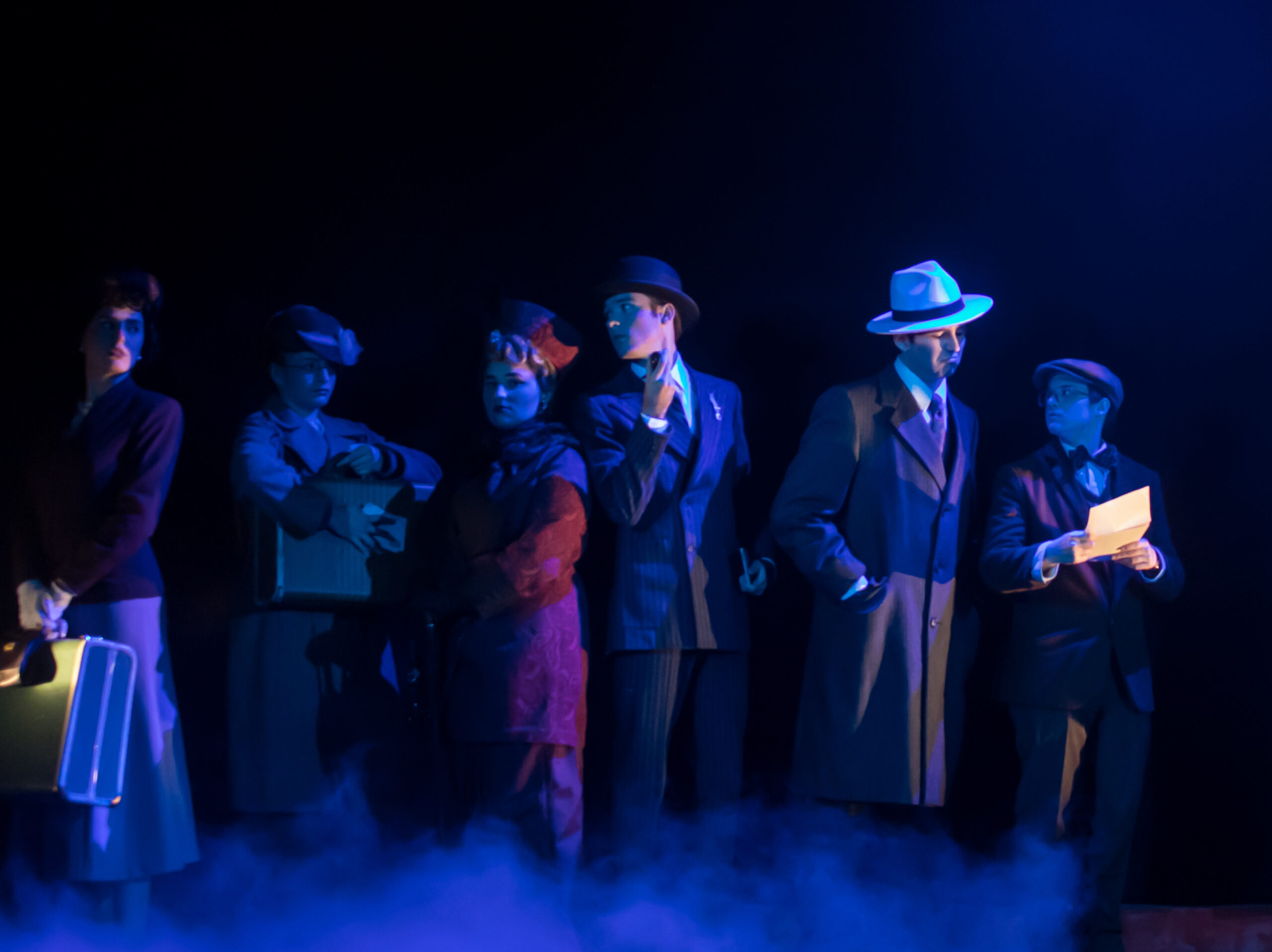
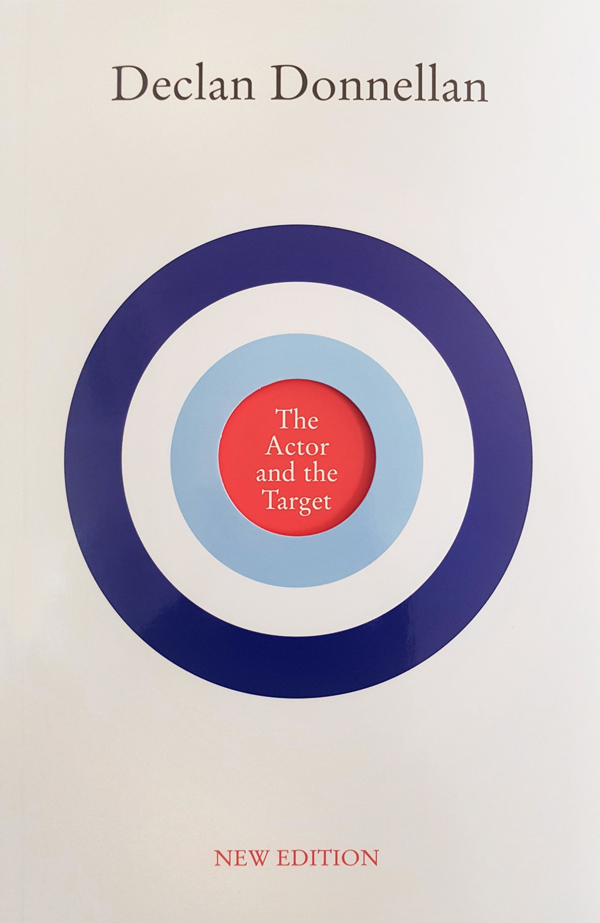
Over the summer, I read The Actor and the Target by Declan Donnellan. It’s about how fear translates into feeling ‘blocked’ in performance, something that reflects many of my feelings in past productions. This wasn’t useful to me until I was prepared enough to let go entirely, and that officially happened after our first complete run-through on 9/8. Below is a link to that journal entry, and much of what’s said on this page is a re-contextualizing of what I was trying to glean from the book.
This book made a major impact on my acting process, and while it doesn’t reflect the entirety of my approach, it deserves a page of its own. In my journal entries, I postulated what would be most helpful to me from the book, but here’s what really worked
“The Target is always specific, transforming, and active“
The Actor and the Target, Pgs. 22-23
In The Curious Incident of the Dog in the Night-Time, there was a scene where I had to enter after having heard that my wife was leaving and would never come back. She wrote me a note and I yelled at her on the phone. These are the facts, ce tu, ce fini! I was worried that these ideas wouldn’t emerge naturally, so I forced these very specific images into my mind and desperately held onto them before going onstage.
Donnellan’s ideas about this changed how I approach this in numerous ways, but here it changed how I interpreted those ideas. Firstly, ‘the target’ is anything, from the idea of my sister yelling at me to the brown chair in front of me. Donnellan emphasizes that these ideas aren’t static beings. The target changes based on who is seeing it. If I had an awful day, I may remark on how awful and ugly that chair looks. If I had a wonderful day, I may find some charm in its cracks and splinters. The chair itself changed based on who I was at that moment. This means that I can’t ‘insert’ some feeling or idea about a situation because that implies I know what it will be.
“To Juliet, it will seem she has very little choice”
The Actor and the Target, Pg.64
Understanding the difference between needs and wants in relation to the target was a huge breakthrough for me. Donnellan gives Juliet as an example of needs versus wants. Wants can be dropped, but needs cannot be moved. You may technically have a choice not to eat, but truthfully you don’t. “To Juliet, it will seem she has very little choice” in whether she sacrifices everything for Romeo. She can technically choose not to, but her love for Romeo imposes its will on her.
This helped me in two notable ways. For one, it means that everything I do is a reaction. I’m not suddenly choosing to do something. Rather, the targets all around me force me into action. Donnellan emphasizes the “this, not that” exercise, in which you are convincing your partner to believe one idea whilst they actively believe something else.
Putting this together: My targets are actively working against me and I have no choice but to respond.
It sounds gloomy, but it’s immensely freeing. It means I don’t need to worry about having all my choices in order. Once I’ve done enough preparation, the ideas I’ve built will carry me through.
“The target exists before you need it”
The Actor and the Target, Pg. 30
Just to emphasize this point, Donnellan repeats that the targets I’ve built are always present. To me, it reads more as a reassurance than a logical point. Don’t worry! There is always a target, it’s even there before you need it!
“Is that all?”
The Actor and the Target, Pg. 184
Once the targets are built and faith in one’s preparation is set, you’re set up to be freed from your own head. Donnellan states that the newly freed actor often asks “Is that all” because the blocked mind can feel overstuffed and forced. The new paradigm I entered in this production process was trying to achieve this feeling. To get so lost in the targets I’ve established and the reactions of my partners that I forget to block myself.
This brought up plenty of interesting tidbits in the process. For instance, on closing night, I knew I wanted to give the best performance ever. Yet, if I focused on this instead of my partners I would be completely blocked. Giving up the certainty I will do well was the key for it to actually occur.