Pre Run:
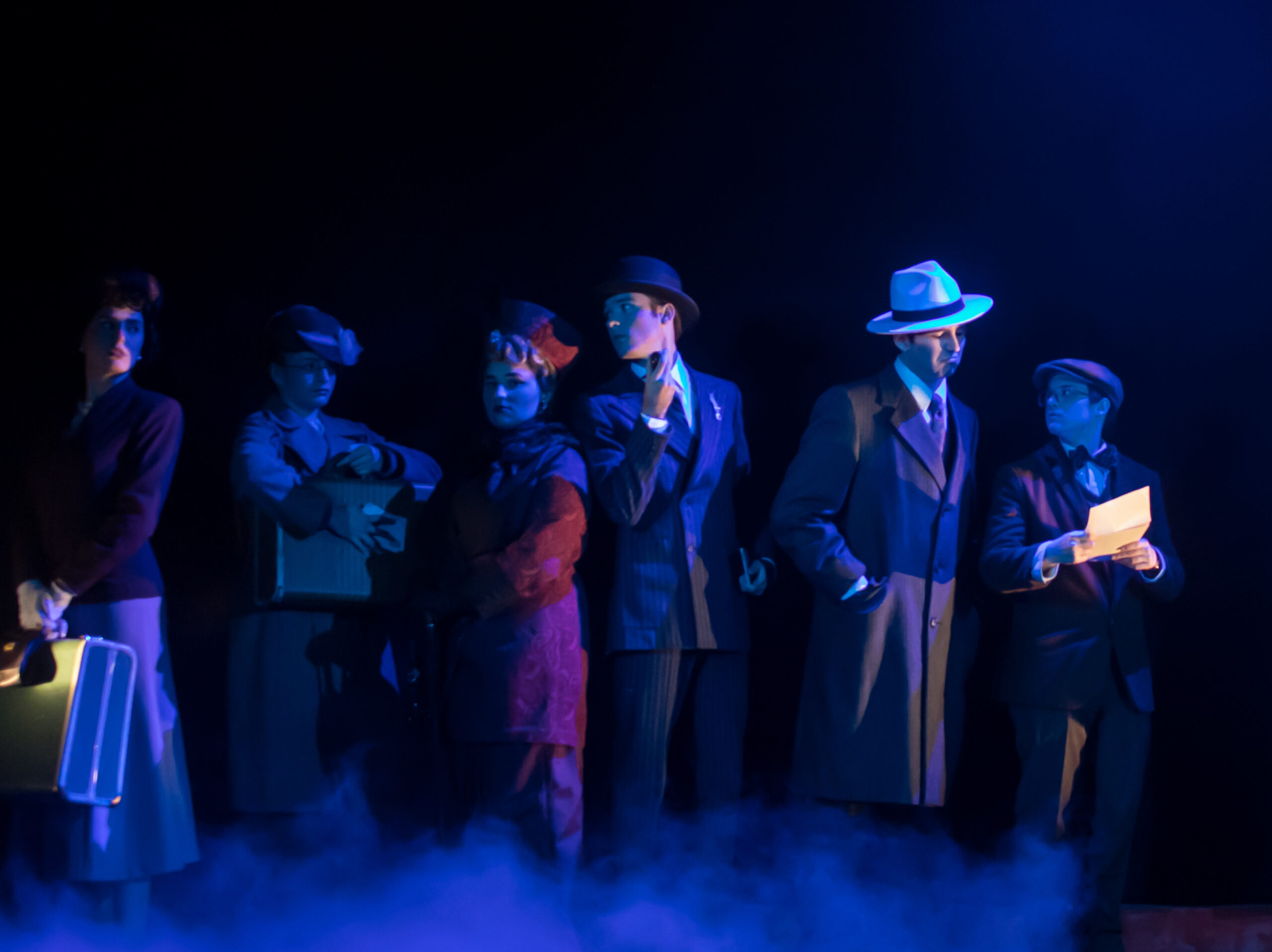
I’ve changed my mind a lot about Colonel Arbuthnot since we last worked on his first appearance, and today we are revisiting it. I want to trust my preparation today and make suggestions based on how I see Arbuthnot today.
Post Run:
We had our first complete run-through today! I felt so-so about the first act, but the intimate scenes were comfortable and I only made one line mistake! The second act was the reverse, with way more line errors but it felt amazing to perform.
Now is when I’m getting really anxious. We have at most five rehearsals to find ourselves in near performance-ready shape. I’ve done thorough exploration at this point, so my next step is exploring The Actor and the Target by Declan Donnellan. It’s naive to think that I’ve grasped what Declan Donnellan was communicating upon the first few readthroughs, but it’s equally naive to think I can begin to without trying it in performance.
The book is based on how to handle an actor’s greatest weakness: fear. His rules are:
- There is always a target
- The target exists outside and at a measurable distance
- The target exists before you need it
- The target is always specific
- The target is always transforming
- The target is always active
Fear is what blocks the actor. Because we’re afraid, we want to control what emotions arise and methodically control our thoughts onstage. This is exactly what kills the actual ‘acting’ and completely blocks the actor. Below are the ideas he presented that I found the most illuminating (right now, at least).
Stakes:
- At any moment there are things to be lost and gained of equal size
Needs v. Wants:
- Wants can be dropped. For needs, you may technically have a choice, but for you, there truly isn’t. I can be with her or not, but if I need to be with her, then there isn’t really a choice. The option commands itself.
Reaction -> action, “this not that”
- It’s not that you are suddenly choosing to do something. Your target is actively doing the opposite of what you need, so you are trying to remedy that.
- The “this not that” exercise is intended to help with this
Research for as long as it works for you
- Learn the circumstances on Arbuthnot for as long as it becomes useful. The moment I start to “fret that something isn’t just right” I can stop.
There is much more to this book, but these resonate with me greatly with where I am in my rehearsal process. The idea behind this book is that if we exist entirely in our heads whilst acting, fear will entirely dominate us. If we focus on external objects that force us to change them, we’re too busy dealing with them to worry about anything else. His ‘rules’ are really just reassurances and clarifications. If you trust your work and the targets you’ve developed (ideas, partners, etc.) you will be okay. Hence another useful thought:
“I’m scared I’ll perform and my ideas will leave me”
- Don’t worry! Rule #1, there is always a target. It’s even there before you need it!
The easiest thing to try first, and which I have already found some success in testing, is trying to tell my target “Do not believe that, believe this!” My target is actively not what I need it to be (understanding me, listening to me, etc.), and I need to change it. This is occurring at (likely) every point in the text.
What I hope this exercise will do is formally introduce myself to working with ‘targets’. To fully explore this idea I need to see what I need to change, what specific thing it is actively believing, how that doesn’t fit my needs, what my needs are, and what specific idea I need them to believe. All of this is done in the moment, and can’t really be done actively, so it is more of a mentality I want to explore next rehearsal.